Practice · Real estate and hospitality
A programme commissioned after the interiors are finished can only decorate them.
ArtisDomus, the practice of Polina Surina, advises on collections and cultural programmes for developments, hotels, members’ clubs and public spaces. It works in Paris, Malta, the United Kingdom, Qatar and the Gulf, and only the owner pays its fee. The work starts with what the place has to mean, to whom, and why each work is there. Nothing is bought until that is written down.
Published by ArtisDomus, written by Polina Surina.
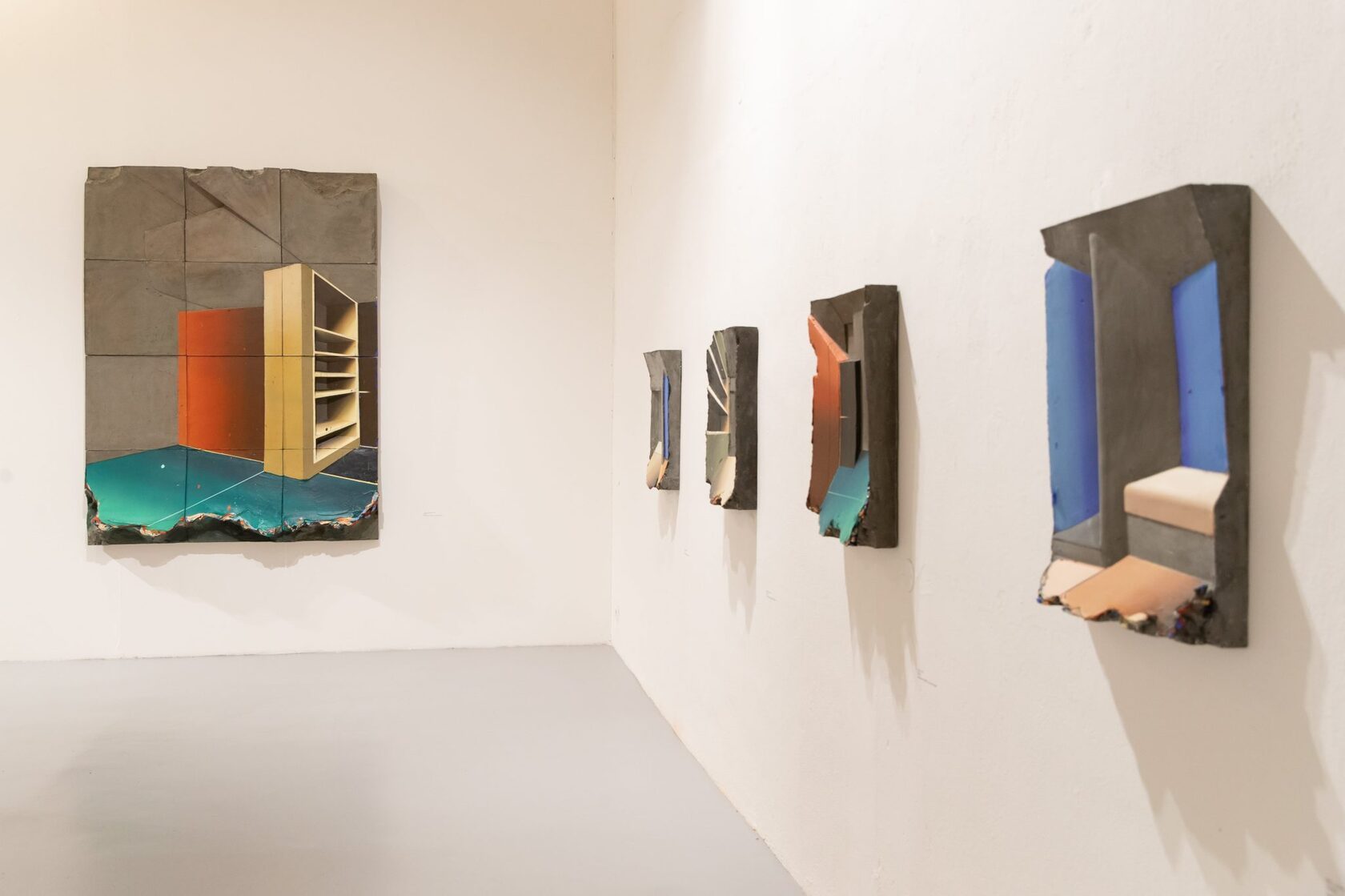
The question
Every competitor claims art and culture.
A developer or an operator arrives with a question that comes before any choice of artist. They want to know what will make this place different from the one being built two streets away, and how early that work has to start. Both parts matter, and the second decides the first.
Commissioned after the interiors are finished, a programme can only decorate them. Commissioned while the plans can still change, it can shape what the building is for.
Method
Candidate works are scored on five weighted criteria.
- Read the owner and the place. Who owns it, who it is for, and which people will be in the room.
- Map the field. Museums, foundations, collectors, galleries and artists who can carry the project.
- Write the thesis. What the collection has to say, and what has to be excluded in order to say it.
- Place each work. Every work has a position and a stated reason for that position.
- Programme and activate. A collection earns its keep through what happens around it.
Each project gets its own weighted set of criteria. Each candidate is scored on the artist’s record with institutions and the museum shows planned for them. It is also scored on the gallery’s readiness to build a shared programme, on price against similar artists, and on whether the work could be replaced within the collection.
The practice takes no commission from galleries and keeps no discounts. Any terms it negotiates for the owner pass to the owner in full and are disclosed in writing.
Case study
At AKI, nine works were chosen from roughly one hundred candidates.
- Asset
- AKI, One Cavendish Square, London: a restaurant in a Grade II listed former banking hall.
- Scope
- Art direction and co-curation of the collection, with site-specific commissions.
- Selection
- Nine works from roughly one hundred candidates.
- Outcome
- The engagement was renewed the following year for a brand activation.
AKI, One Cavendish Square · Case study, with the two works made for AKI and fourteen installation views.
In this area
Eight entries in this area
What consents does an art programme in a listed Maltese building need? · Reference
Who commissions the art in a branded residence, and when? · Reference
The cash limit when buying art in Malta · Reference
Glossary: Real estate and hospitality · Glossary
Scheduled property in Malta: all works need the Planning Board’s permission · Glossary
When an interior designer takes a trade discount, whose money is it? · Reference
Who instructs a members’ club art programme, and when does it start? · Reference
When architecture becomes the product · Reference